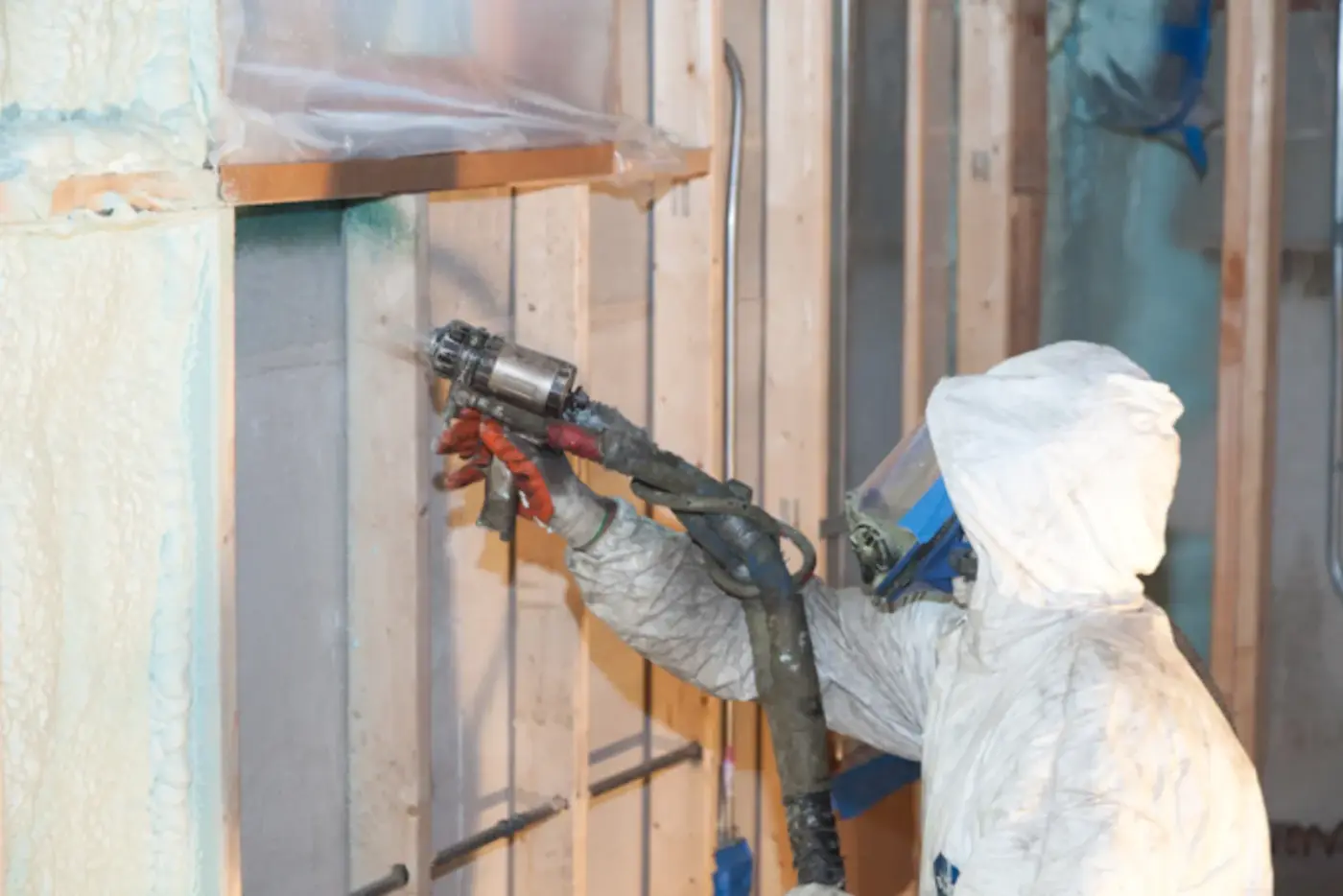
In Atlanta the foam question is a moisture question. Open-cell (about R-3.7 per inch, vapor-open, economical) and closed-cell (R-6.5 to 7, vapor-blocking, rigid) both insulate — but Georgia humidity decides where each is safe, and getting it backwards builds problems into the walls.
The humidity rule of thumb
Closed-cell owns the moisture-adjacent assignments: crawl space walls, rim joists, and anywhere foam meets ground-coupled or outdoor-humid surfaces. Open-cell earns its keep in rooflines and framed walls where depth is available and drying potential matters.
Open-cell at the roof deck is common and code-supported here, with one caveat worth respecting: it lets water vapor pass, so thickness specs and HVAC dehumidification get checked, and any roof leak announces itself — which pros consider a feature.
Crawl spaces, the Atlanta classic
Half this market's comfort problems start under the floor: vented crawl spaces breathing summer humidity into ductwork and subfloors. The fix — sealed crawl, closed-cell on the walls, vapor barrier on the ground — turns the worst space in the house into a dry semi-conditioned one.
Sound, structure, and budget
Open-cell damps sound noticeably — the media-room and street-noise upgrade. Closed-cell adds racking strength on thin-framed additions and garages. Budget-wise, open-cell wins per inch, closed-cell per inch of depth available; the estimate should show the arithmetic.
The mixed-spec answer
Most Atlanta whole-house jobs mix foams by assignment: closed-cell below, open-cell above. Distrust one-foam-fits-all pitches in either direction — the house has different moisture zones, and the spec sheet should read like it knows that.
The humid-climate rule, condensed
Closed-cell where moisture lives — crawl walls, rim joists, ground-adjacent anything. Open-cell where depth is generous and drying matters — rooflines and framed walls. Mixed specs are the mark of a bid that read the house.
If a contractor pitches one foam for everything, the pitch is about their rig, not your walls.